Basilica Cistern Istanbul: History, Medusa Heads & Visitor Guide
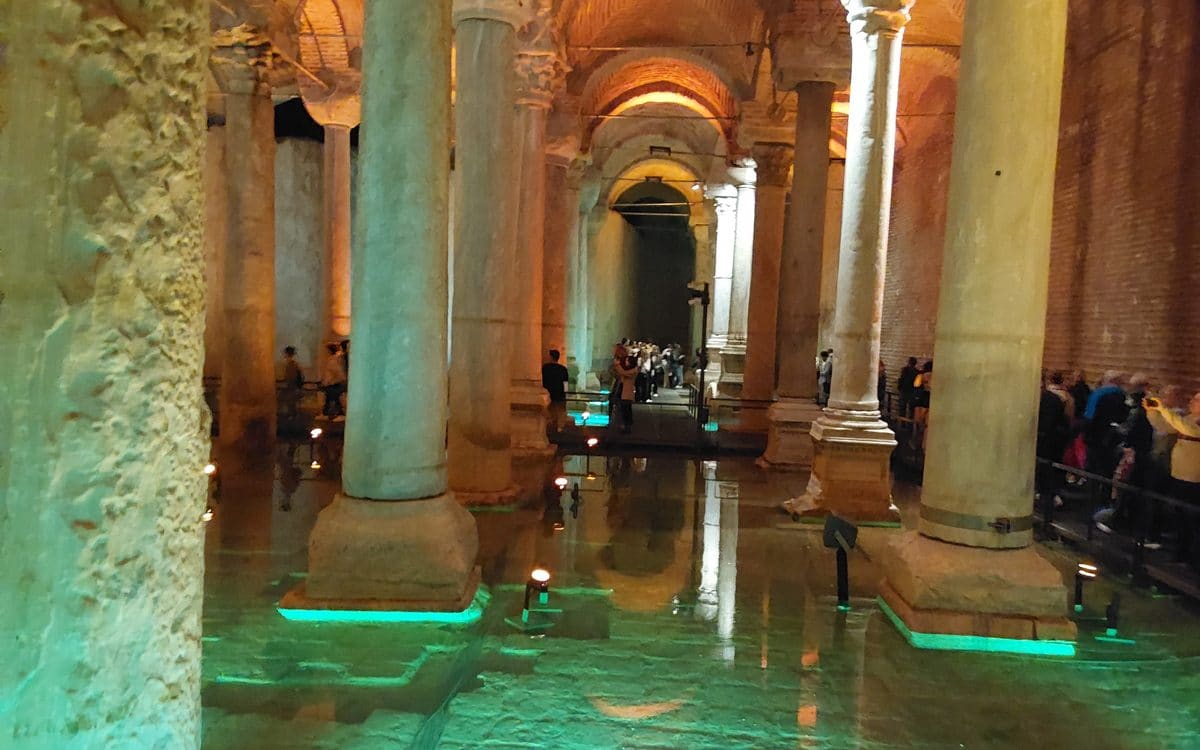
Hidden beneath the streets of Sultanahmet, just a short walk from Hagia Sophia and the Blue Mosque, the Basilica Cistern is one of Istanbul's most extraordinary and most atmospheric attractions. Built in 532 AD under Emperor Justinian I, this vast underground reservoir once supplied water to the Great Palace of Constantinople and the surrounding imperial district. Today, with its forest of illuminated marble columns reflected in shallow water and its mysterious Medusa heads lurking in the shadows, it is one of the most visited and most photographed sites in Turkey — and rightly so.
The History of the Basilica Cistern
The Basilica Cistern — known in Turkish as Yerebatan Sarnıcı, meaning the Sunken Cistern — takes its name from a large public basilica that once stood on the site above ground. The cistern was built by the Byzantine Emperor Justinian I in 532 AD, using thousands of slaves and workers, as part of an ambitious programme to secure Constantinople's water supply. Water was carried to the cistern by aqueduct from a forest 19 kilometres north of the city and stored here for use during sieges or periods of drought. The cistern continued to supply water to the Ottoman palaces long after the conquest of 1453. It fell into disuse in the 18th century and was largely forgotten by the outside world until a French scholar named Petrus Gyllius rediscovered it in 1545 after noticing that local residents were drawing water — and catching fish — through holes in their basement floors.
The Architecture of the Cistern
The Basilica Cistern measures 138 metres long and 65 metres wide — approximately the size of two football pitches — and could hold up to 80,000 cubic metres of water at full capacity. The ceiling is supported by 336 marble columns arranged in 12 rows of 28, each column standing 9 metres high and topped with a Byzantine capital. The columns were not purpose-built for the cistern but were repurposed from earlier Roman structures across the empire, which is why they vary considerably in style, size, and the type of marble from which they are carved. The variety of capitals — Doric, Ionic, Corinthian — gives the interior a pleasingly irregular character that adds to its mysterious atmosphere. The vaulted brick ceiling above the columns has survived remarkably intact for nearly 1,500 years.
The Medusa Heads
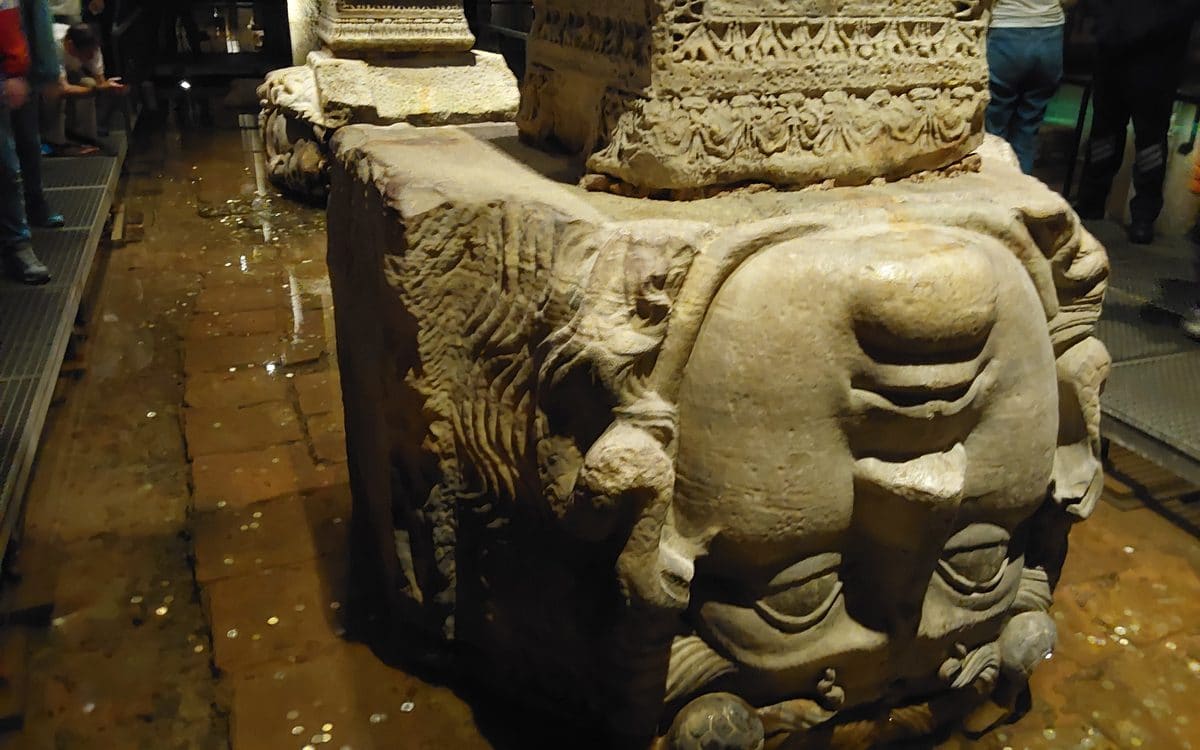
The most famous and most photographed feature of the Basilica Cistern is a pair of giant Medusa heads, each approximately 1 metre high, used as column bases in the northwestern corner of the cistern. One head is positioned on its side, the other upside down. The reason for this unusual placement has been debated by historians for centuries. The most widely accepted explanation is purely practical — the heads were simply the right size to raise the columns to the required height, and their orientation was determined by structural necessity rather than artistic intention. A more romantic theory holds that the Medusa heads were deliberately placed sideways and upside down to neutralise their mythological power — in Greek legend, meeting the gaze of Medusa turned the viewer to stone. Whatever the reason, the effect in the dim, watery light of the cistern is genuinely eerie and unforgettable.
The Cistern After Renovation
The Basilica Cistern underwent a major renovation project in recent years and reopened with significantly improved facilities, new lighting systems, and elevated walkways that allow visitors to explore more of the space than was previously possible. The new lighting design is particularly effective, casting dramatic shadows between the columns and illuminating the water below to reveal the fish that have lived in the cistern for decades. The renovation has also added new interactive displays explaining the history and construction of the cistern. Some visitors feel that the renovation has made the space slightly less mysterious than it was in its earlier, darker incarnation — but the fundamentals remain the same, and the Basilica Cistern is still one of the most atmospheric spaces in Istanbul.
Practical Visitor Information
The Basilica Cistern is open daily throughout the year. It is located on Alemdar Caddesi in Sultanahmet, a three-minute walk from Hagia Sophia and five minutes from the Blue Mosque. Tickets should be purchased in advance online to avoid queues, which can be very long in peak season. The cistern is relatively cool year-round — a welcome relief in the heat of summer — but can feel damp in winter. The space is not suitable for visitors with severe mobility impairments, as there are steps at the entrance and the walkways are narrow in places. Photography is permitted throughout and the cistern is exceptionally photogenic, particularly with a wide-angle lens in the lower light conditions.
Getting to the Basilica Cistern from Istanbul Airport
The Basilica Cistern is located in the heart of Sultanahmet on Istanbul's historic peninsula, approximately 45 to 60 minutes from Istanbul Airport (IST) by private transfer. A private airport transfer with Airports Transfer Turkey takes you directly from the arrivals hall to your hotel in Sultanahmet or the surrounding area — with fixed pricing, flight tracking, and a professional meet-and-greet service so you never have to search for your driver. The cistern is within easy walking distance of most Sultanahmet hotels, making it a natural first stop after checking in. If you are arriving at Sabiha Gökçen Airport (SAW) on the Asian side, allow approximately 60 to 75 minutes by private transfer. Book your Istanbul airport transfer in advance for a seamless start to your visit.
Related Articles
Blue Mosque: Istanbul's Most Iconic LandmarkThe Bosphorus: Where Europe Meets AsiaDolmabahçe Palace: Ottoman Grandeur on the BosphorusVisiting Istanbul? We'll Handle the Transfer.
Fixed prices · Flight tracking · Meet & greet · No prepayment