Hagia Sophia: Istanbul's Greatest Monument | Complete Visitor Guide
Few buildings in the world carry as much history as Hagia Sophia. For nearly 1,500 years, this extraordinary structure has stood at the heart of Istanbul, serving as a cathedral, a mosque, a museum — and a mosque once again. Whether you are a history enthusiast, an architecture lover, or simply a curious traveller, Hagia Sophia is the single most unmissable landmark in Istanbul.
Pick your date and time: the price of every vehicle is shown on the next step, before you pay. Free cancellation up to 24 hours before pickup.
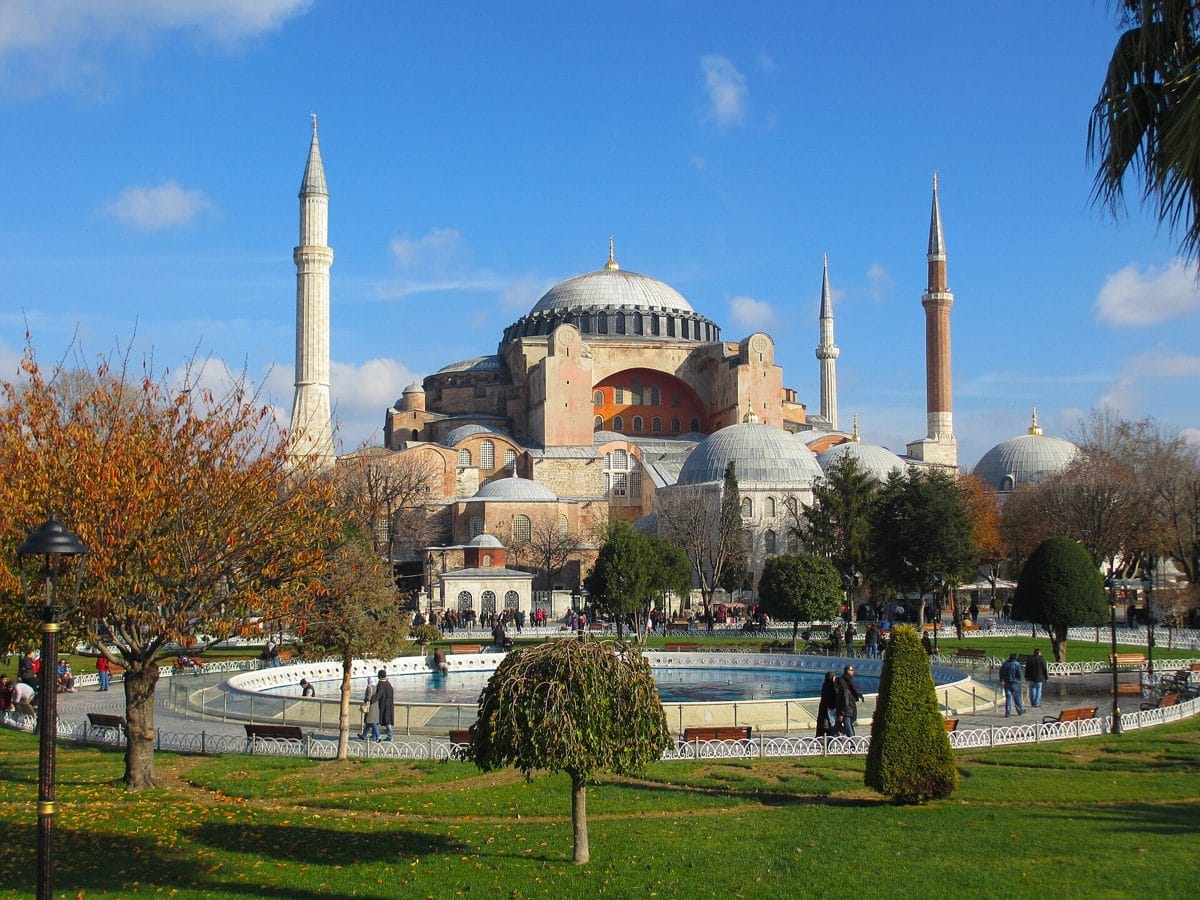
A Marvel of Byzantine Engineering
Completed in 537 AD under Emperor Justinian I, Hagia Sophia — whose name means Holy Wisdom in Greek — was for nearly a thousand years the largest cathedral in the world. Its central dome, 56 metres high and 31 metres in diameter, was considered an almost impossible feat of engineering at the time. Forty windows ring the base of the dome, flooding the interior with light and creating the famous illusion that the dome is floating on a halo of sunlight. Byzantine writers described it as a structure "suspended from heaven by a golden chain."
From Cathedral to Mosque — and Back Again
After the Ottoman conquest of Constantinople in 1453, Sultan Mehmed II converted Hagia Sophia into a mosque. The Byzantine mosaics were plastered over, four minarets were added to the exterior, and large calligraphy roundels bearing the names of Allah, the Prophet Muhammad, and the first caliphs were hung inside. The building served as a mosque for nearly 500 years until 1934, when Atatürk transformed it into a secular museum open to all. In 2020, following a court ruling, it was reconverted into a functioning mosque — though it remains open to visitors of all backgrounds and faiths outside of the five daily prayer times.
What to See Inside Hagia Sophia
Despite its turbulent history, the interior of Hagia Sophia is remarkably well preserved and visually overwhelming. The sheer scale of the space — the nave alone is 82 metres long — is immediately striking, even from the galleries above. Look out for the golden Byzantine mosaics, particularly the Deësis mosaic on the upper gallery level, which depicts Christ flanked by the Virgin Mary and John the Baptist. It is widely considered one of the finest examples of Byzantine art in existence. Also look for the Viking runic inscriptions scratched into the upper gallery railing by Varangian Guard soldiers centuries ago and, on your way out, the mosaic of the Virgin and Child with Emperors Constantine and Justinian above the exit door. The famous Weeping Column stands on the ground floor, which is now reserved for worship and is not part of the visitor route.
Practical Visitor Information
Hagia Sophia is in Sultanahmet on the historic peninsula, a short walk from the Blue Mosque and Topkapı Palace. Since January 2024 foreign visitors use a separate tourist entrance on the south-east side, opposite the Fountain of Ahmed III, and follow a route through the upper galleries with the Byzantine mosaics; the ground floor is kept for worshippers. The ticket costs 25 euros per person (2026), young children enter free (sources differ on the age limit), and the Museum Pass Istanbul is not valid here. Everyone passes through a security check. As an active mosque, Hagia Sophia asks for modest dress: shoulders and knees covered, and a headscarf for women; cover-ups are sold at the entrance rather than lent. Visits pause during the five daily prayers and on Fridays around midday, and the times follow the prayer timetable, so arrive at opening time and allow 45 to 60 minutes for the galleries. The separate Hagia Sophia History and Experience Museum nearby has its own ticket: 25 euros, rising to 30 euros from 1 January 2027. Our Istanbul attractions: hours, tickets and closed days table covers the other sights nearby.
Restoration work on the dome has been under way since April 2025. Parts of the interior are covered by scaffolding and a printed canvas, but the building stays open to visitors.
Tips for Your Visit
- Come at opening time. Visits usually start at about 09:00, and the queue for tickets and security grows quickly from mid-morning.
- Avoid Friday midday. On Fridays the building closes to visitors from about half an hour before the noon prayer until about an hour and a half after it.
- Buy at the booth. Tickets are sold at the booth opposite the Fountain of Ahmed III, and cards are accepted. Websites that sell tickets online are usually resellers.
- Travel light. Large bags are not allowed, and there is no cloakroom, café or toilet on the visitor route.
- Dress for a mosque. Shoulders and knees covered; women also cover their hair. Cover-ups are sold at the entrance.
- Plan for 45 to 90 minutes. The ramp up to the galleries is long and uneven in places.
- Next door: the Blue Mosque is free, the Basilica Cistern is about 150 metres away and Topkapı Palace is behind Hagia Sophia (closed on Tuesday).
Frequently Asked Questions
How much does it cost to visit Hagia Sophia?
Foreign visitors pay 25 euros per person (2026). Young children enter free; sources differ on the age limit, so bring passports. The Museum Pass Istanbul is not valid.
What are Hagia Sophia's opening hours?
There is no fixed official timetable. Visits usually start at about 09:00 and pause during the five daily prayers; on Fridays the building closes to visitors around the noon prayer, from about 30 minutes before to about 90 minutes after it.
Is there a dress code?
Yes. Hagia Sophia is an active mosque: cover shoulders and knees, and women cover their hair. Cover-ups are sold at the entrance.
Where is the tourist entrance?
Foreign visitors use a separate entrance on the south-east side, opposite the Fountain of Ahmed III, and visit the upper galleries with the Byzantine mosaics. The ground floor is kept for worshippers.
How do I get to Hagia Sophia from Istanbul Airport?
Hagia Sophia is next to the Sultanahmet stop of the T1 tram. By public transport you reach the old city by airport coach or metro and finish on the tram. A private transfer takes about 45 to 75 minutes from Istanbul Airport, depending on traffic.
Getting to Hagia Sophia from Istanbul Airport
Hagia Sophia is in Sultanahmet, on the historic peninsula, a short walk from most hotels in the old city. From Istanbul Airport (IST) a private transfer takes about 45 to 75 minutes, depending on traffic. From Sabiha Gökçen Airport (SAW) on the Asian side, allow about 60 to 90 minutes.
With Airports Transfer Turkey your driver waits just outside the arrivals exit, and after you land they send you the exact meeting point and a short video on WhatsApp. The price is per vehicle and shown before you pay, with no extra charge for traffic or flight delays. See Istanbul Airport to Sultanahmet and Sabiha Gökçen to Sultanahmet for prices.
By public transport the airport coaches, metro and tram are the cheaper options, with changes and luggage to manage. Our guides compare every option with journey times and 2026 fares: Hagia Sophia and the Blue Mosque from the airport, Istanbul Airport to Sultanahmet and Sabiha Gökçen Airport to Sultanahmet.
Related guides: Istanbul Mosques Beyond Sultanahmet · Istanbul Museums · Private Istanbul Tours
Photo: Berlinaut, CC BY-SA 4.0, via Wikimedia Commons.
You might also like

Visiting Istanbul? We'll Handle the Transfer.
Price per vehicle · Flight tracking · Meet & greet · Booking guarantee online, rest in cash