Topkapi Palace Istanbul: Complete Visitor Guide

For nearly four centuries, Topkapi Palace served as the administrative centre of the Ottoman Empire and the private residence of its sultans. Perched on a promontory overlooking the confluence of the Bosphorus, the Golden Horn, and the Sea of Marmara, it is one of the most dramatically situated palaces in the world. Today it houses one of Turkey's most important museums, with collections ranging from priceless jewels and imperial weapons to sacred Islamic relics and centuries of Ottoman court life.
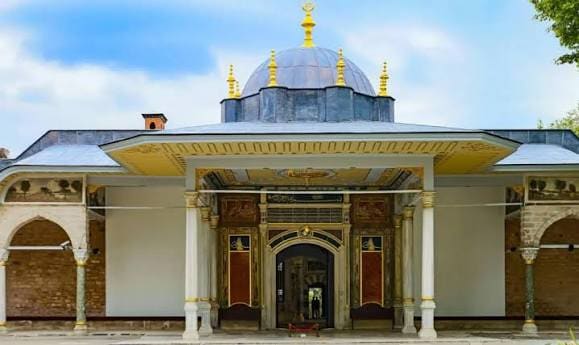
History of Topkapi Palace
Construction of Topkapi Palace began in the 1460s under Sultan Mehmed II, the conqueror of Constantinople, and was completed around 1478. The palace served as the seat of Ottoman government and the private residence of the sultans for nearly 400 years, until Sultan Abdülmecid I moved the imperial court to the newly built Dolmabahçe Palace in 1853. The complex covers approximately 700,000 square metres — nearly the size of 100 football pitches — and at its peak housed up to 4,000 people within its walls, including the sultan, his family, the imperial court, and thousands of servants and officials.
The Four Courtyards
Topkapi Palace is organised around four successive courtyards, each more exclusive than the last. The First Courtyard, known as the Court of the Janissaries, was open to the general public and contained service buildings and a Byzantine church. The Second Courtyard was the administrative heart of the empire, where the Imperial Council — the Divan — met to govern. The Third Courtyard contained the Throne Room where the sultan received ambassadors, as well as the treasury and the sacred relics. The Fourth Courtyard was the sultan's private garden, with pavilions overlooking the Bosphorus and the Golden Horn.
The Imperial Treasury
The Imperial Treasury is one of the highlights of any visit to Topkapi Palace and contains some of the most extraordinary objects in the world. Among the most famous exhibits are:
- The Spoonmaker's Diamond — an 86-carat pear-shaped diamond surrounded by 49 smaller diamonds, one of the largest diamonds on public display anywhere in the world
- The Topkapi Dagger — an ornate jewelled dagger encrusted with three enormous emeralds and a watch concealed in the handle, made as a gift for the Persian shah Nadir Shah in 1747
- The Throne of Shah Ismail — a gold throne encrusted with precious stones, seized as war booty in the 16th century
- Numerous imperial crowns, ceremonial armour, and bejewelled objects from across the Ottoman world
The Sacred Relics
The Pavilion of the Sacred Mantle houses one of the most remarkable collections of Islamic sacred objects in the world, brought to Istanbul after the Ottoman sultan assumed the title of Caliph in the 16th century. The collection includes the mantle and sword of the Prophet Muhammad, his bow and a tooth, the staff of Moses, the sword of David, and a letter written by the Prophet in his own hand. The pavilion is a place of active devotion as well as a museum — Quranic recitation has been broadcast continuously within the chamber since the 16th century.
The Harem
The Harem is one of the most fascinating and most misunderstood parts of Topkapi Palace. Far from the romanticised fantasies of Western imagination, the Harem was in reality a highly structured and strictly organised private household. At its peak it contained up to 400 women — the sultan's mother, his wives, concubines, and their children, along with female servants and eunuch guards. The Harem contains over 400 rooms, including ornate audience chambers, baths, courtyards, and the apartments of the Valide Sultan — the sultan's mother, who was the most powerful woman in the empire. The Harem is included in the combined ticket for foreign visitors and is well worth the time.
Practical Visitor Information
Topkapi Palace is open daily except Tuesdays. It opens at 9 AM and closes in the late afternoon, around 5–5:30 PM; ticket sales stop earlier, so aim to arrive by 4 PM. Foreign visitors buy a single combined ticket (2,750 TL, about €55, in 2026) that covers the palace courtyards, the Treasury, the Sacred Relics, the Harem and Hagia Irene. Queues can be very long in peak season — booking online in advance is strongly recommended. Allow at least three to four hours to explore the palace properly. Audio guides are available and add considerable depth to the visit.
Getting to Topkapi Palace from Istanbul Airport
Topkapi Palace is located in the Sultanahmet neighbourhood on Istanbul's historic peninsula, approximately 45 to 60 minutes from Istanbul Airport (IST) by private transfer. A private airport transfer with Airports Transfer Turkey takes you directly from the arrivals hall to your hotel or to the Sultanahmet area, with a fixed price agreed in advance and a professional meet-and-greet service included. If you are arriving at Sabiha Gökçen Airport (SAW) on the Asian side, allow approximately 60 to 75 minutes by private transfer across the Bosphorus Bridge.
Related Articles
Basilica Cistern: Istanbul's Underground WonderBlue Mosque: Istanbul's Most Iconic LandmarkThe Bosphorus: Where Europe Meets AsiaVisiting Istanbul? We'll Handle the Transfer.
Fixed prices · Flight tracking · Meet & greet · No prepayment