Dolmabahçe Palace Istanbul: History, Tours & Visitor Guide
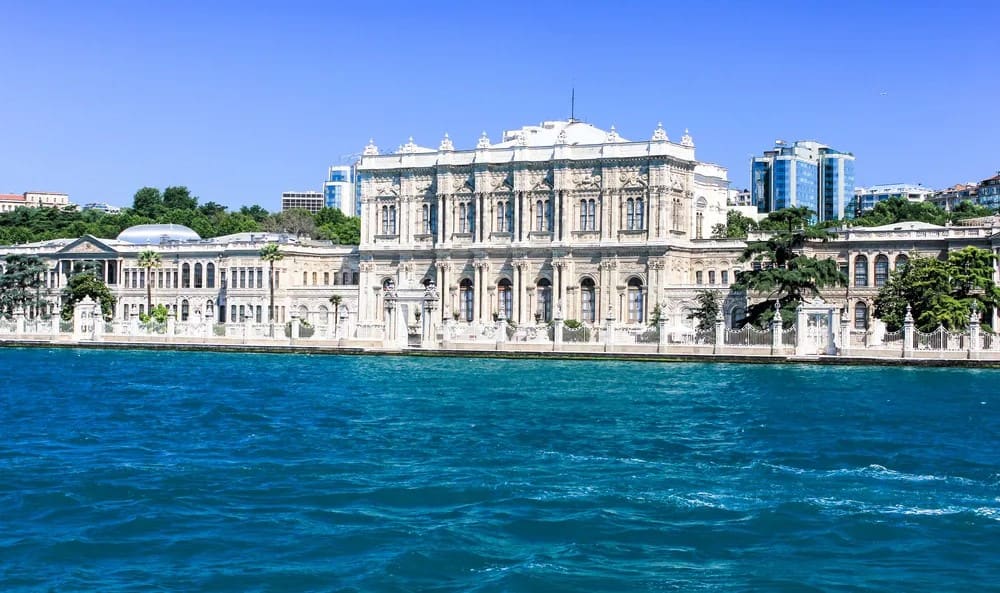
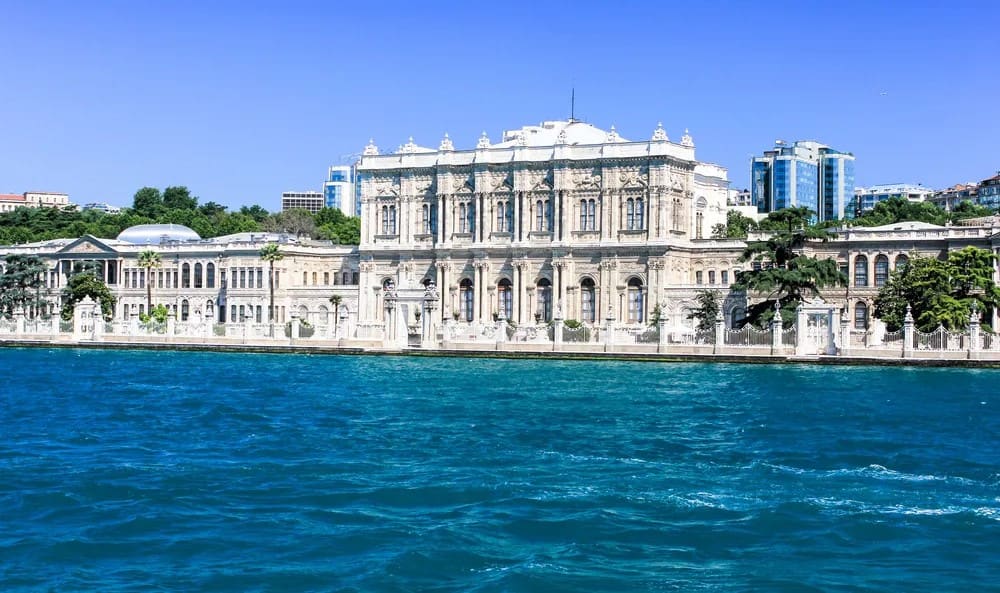
Stretching 600 metres along the European shore of the Bosphorus in the Beşiktaş district, Dolmabahçe Palace is the largest palace in Turkey and one of the most opulent royal residences in the world. Built between 1843 and 1856 under Sultan Abdülmecid I, it replaced Topkapi Palace as the administrative centre of the Ottoman Empire and served as the imperial seat of government until the empire's final years. A stunning fusion of European baroque, rococo, and neoclassical architecture with Ottoman decorative traditions, Dolmabahçe represents the Ottoman Empire at the height of its engagement with the Western world — and at the beginning of its long decline.
The History of Dolmabahçe Palace
The name Dolmabahçe means "filled garden" in Turkish — the palace was built on land reclaimed from the Bosphorus, where a royal garden had previously stood. Construction began in 1843 under the direction of the Armenian architect Nikoğos Balyan and his father Karabet Balyan, and was completed in 1856 at a cost that effectively bankrupted the Ottoman treasury. The palace was financed partly through foreign loans and partly through the sale of Egyptian cotton, and its construction is often cited as one of the factors that led to the Ottoman Empire's catastrophic financial crisis of the 1870s. Nevertheless, the result was extraordinary — a palace that could rival Versailles in scale and that was intended to signal to the European powers that the Ottoman Empire was a modern, sophisticated state worthy of equal treatment. Twelve sultans lived and worked in Dolmabahçe between its completion and the abolition of the sultanate in 1922.
A Palace of Superlatives
Dolmabahçe Palace contains 285 rooms, 46 halls, 6 hammams, and 68 toilets spread across a floor area of approximately 45,000 square metres. The statistics of its construction are staggering:
- 14 tonnes of gold and 40 tonnes of silver were used in the decoration of the interior
- The Ceremonial Hall — the largest room in the palace — has a ceiling height of 36 metres and is topped by a dome
- The chandelier in the Ceremonial Hall weighs 4.5 tonnes, contains 750 lamps, and was a gift from Queen Victoria of Britain
- The staircase banister is made entirely of Baccarat crystal
- The palace contains 131 kilogram gold-thread Hereke carpets, woven specifically for the building
- The gardens extend to 160,000 square metres along the Bosphorus waterfront
Atatürk and Dolmabahçe Palace
Dolmabahçe Palace holds a special and deeply emotional significance in Turkish history beyond its Ottoman legacy. Mustafa Kemal Atatürk, the founder and first president of the Turkish Republic, used the palace as his Istanbul residence during the final years of his life. He died here on 10 November 1938, at 9:05 AM, in the small bedroom on the first floor that he preferred for its simplicity relative to the palace's otherwise overwhelming grandeur. Every clock in Dolmabahçe Palace is stopped at 9:05 to mark the moment of his death — a deeply moving detail that transforms the palace from a monument to imperial excess into something far more personal and affecting. On the anniversary of his death each year, the entire country observes a minute of silence at this time, and the scene at Dolmabahçe is particularly poignant.
The Harem and Selamlık
Like Topkapi Palace, Dolmabahçe is divided into separate sections for the private imperial household and the public administrative functions of the state. The Selamlık — the men's section — contains the grand ceremonial spaces, the Throne Hall, and the sultan's formal reception rooms. The Harem — the private imperial household — is an equally extraordinary complex of apartments, baths, and gardens that housed the sultan's mother, wives, concubines, children, and their attendants. Unlike the Topkapi Harem, which developed organically over centuries, the Dolmabahçe Harem was purpose-built and reflects a more rational, European approach to spatial organisation. Both sections are included in the standard palace ticket, and you can explore them at your own pace with the audio guide.
Practical Visitor Information
Dolmabahçe Palace is open every day except Mondays, from 9 AM to 5:30 PM. Visits are self-guided with an audio guide included in the ticket; the combined ticket (2,000 TL, about €40, in 2026) covers the Selamlık, the Harem and the palace collections. The palace is extremely popular and tickets sell out quickly in peak season; booking online well in advance is strongly recommended. Photography is not permitted inside the palace rooms, which can be frustrating but is strictly enforced. The palace gardens and the Bosphorus-facing terrace are open for independent exploration and offer some of the finest views of the strait in Istanbul. The Clock Tower at the palace gate and the ornate ceremonial gates on the waterfront are worth examining closely before entering.
Getting to Dolmabahçe Palace from Istanbul Airport
Dolmabahçe Palace is located in the Beşiktaş district on the European shore of the Bosphorus, approximately 40 to 55 minutes from Istanbul Airport (IST) by private transfer depending on traffic. The palace sits directly on the waterfront and is easily identified from the water — if you take a Bosphorus cruise, you will pass directly in front of it. A private airport transfer with Airports Transfer Turkey will take you directly from the arrivals hall to your hotel in Beşiktaş, Ortaköy, or the surrounding Bosphorus-side neighbourhoods, with a fixed price, flight tracking, and a professional meet-and-greet service. Beşiktaş is an excellent base for exploring both Dolmabahçe and the surrounding waterfront area. If you are arriving at Sabiha Gökçen Airport (SAW) on the Asian side, allow approximately 55 to 70 minutes by private transfer across the Bosphorus Bridge.
Related Articles
Galata Bridge: The Heart of IstanbulGalata Tower: Istanbul's Most Iconic ViewpointGrand Bazaar: Shopping in the World's Oldest MallVisiting Istanbul? We'll Handle the Transfer.
Fixed prices · Flight tracking · Meet & greet · No prepayment