İstiklal Avenue Istanbul: A Walk from Taksim to Tünel
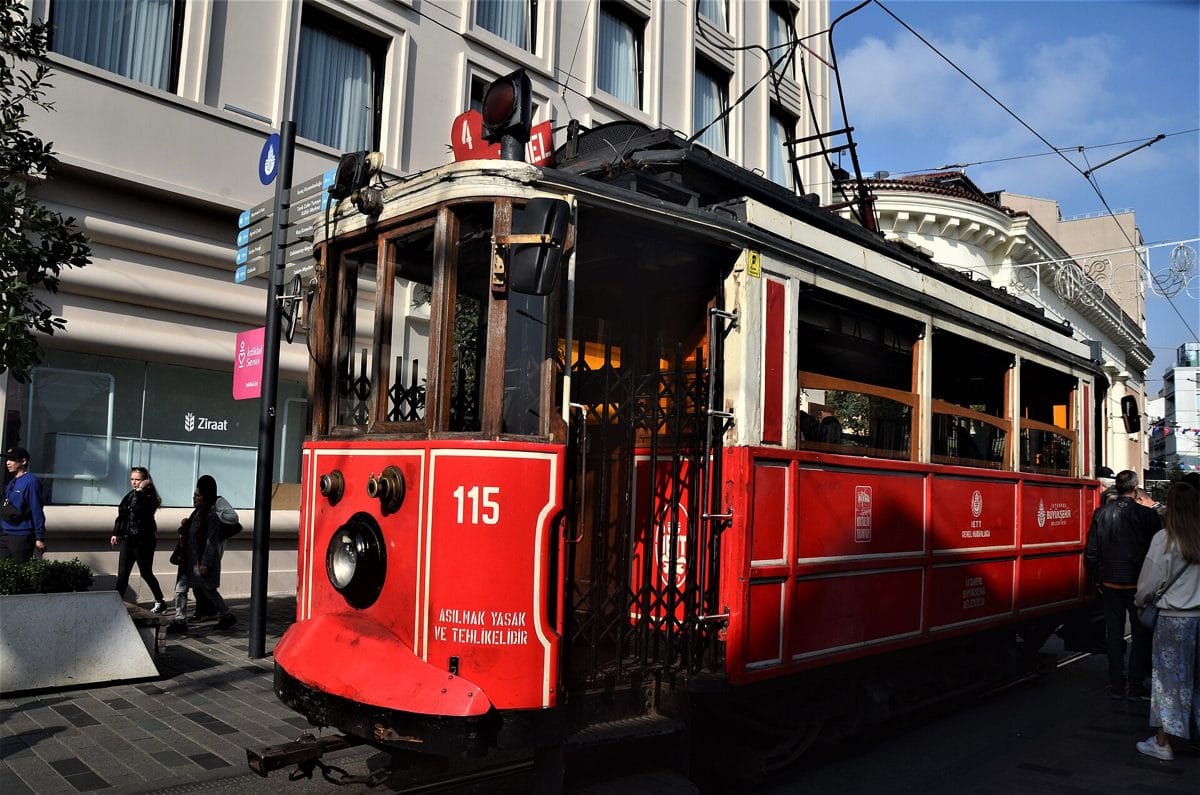
İstiklal Avenue is Istanbul's best-known pedestrian street, about 1.4 km long, running from Taksim Square down to Tünel in Beyoğlu. It is free to walk, always open, and lined with passages, old commercial buildings, churches, shops and cafés, with a red heritage tram down the middle. This guide takes you along it from Taksim to Tünel, explains the tram and the history, and shows how to get there from Sultanahmet and Taksim.
Pick your date and time: the price of every vehicle is shown on the next step, before you pay. Free cancellation up to 24 hours before pickup.
Visiting at a Glance
| Opening hours | The street is a public pedestrian street and is always open; shops, cafés and restaurants keep their own hours |
| Closed day | None, though large public events at Taksim can close the street for a time |
| Cost | Free to walk. The heritage tram is paid with an Istanbulkart. |
| Length | About 1.4 km from Taksim Square to Tünel Square |
| Nearest stops | M2 Taksim at the top; M2 Şişhane or the Tünel funicular at the bottom |
| Time to allow | As long as you like: the walk is easy, but stops for a museum, a meal or the side passages fill an evening |
Walking It from Taksim to Tünel
Walking downhill from Taksim is the easier direction, and it ends at the Tünel funicular, which takes you down towards Karaköy and the Bosphorus. The avenue is straight, wide and crowded, and most of its interest lies just off the main line in the passages and courtyards.
The Taksim End
The avenue starts at Taksim Square, where the M2 metro and the F1 funicular to Kabataş meet. Cars cannot enter the square or the street, so the first minutes are a good time to find the heritage tram stop and decide whether to ride or walk.
Galatasaray, in the Middle
The Galatasaray stop is the third of the tram's five. Galatasaray High School here is generally described as the oldest secondary school in Turkey and the first lycée of the European type. Churches along and just off the avenue include St Anthony of Padua, Hagia Triada and the Union Church.
Passages, Hans and Façades
The side entrances are the better part of the walk. Çiçek Pasajı, Hazzopulo Pasajı and Suriye Pasajı are covered passages, typically with eating places and shops. Narmanlı Han and Tokatlıyan Han are historic commercial buildings, and Casa Botter is an Art Nouveau building. The Atlas Cinema is another landmark often mentioned.
The Tünel End
The avenue finishes at Tünel Square. If you walk up from Galata Tower instead, the Tarık Tunaya Cultural Centre on the way up is free to enter, according to the Ministry, and the Galata Mevlevi Lodge is within walking distance. Our Galata Tower guide covers the tower, and the museums guide has the Pera Museum.
A Short History
The Ottomans called the street Cadde-i Kebir, the Grand Avenue, and Europeans called it the Grande Rue de Péra, after the district of Pera. It was renamed İstiklal Caddesi, Independence Avenue, after the Republic was declared in 1923.
The Tünel funicular opened in 1875 and is usually described as the second-oldest underground urban railway in the world. Horse-drawn trams ran from 1871 and were replaced by electric trams, usually dated to 1914, which were withdrawn in the 1960s. The street was pedestrianised around the early 1990s, and the heritage tram returned at the end of 1990.
The Nostalgic Tram
The red tram runs along the avenue between Taksim and Tünel on a line of about 1.6 km. It has five stops: Taksim, Odakule, Galatasaray, Ağa Camii and Tünel. Rides are paid with an Istanbulkart.
- Hours. Published hours differ, from roughly 07:00 to 20:00 in some listings and to 22:00 in others, so check İETT for the current timetable.
- Frequency. Sources disagree widely, so treat the tram as a pleasant ride rather than transport you depend on.
- The trams. İETT says four heritage trams run on overhead wire, and it has been testing a battery-powered replacement designed to look the same. Overhead lines may eventually be removed.
Tips for Visiting
- Daytime suits shopping; evening suits cafés and dinner.
- Keep your bag zipped and your phone out of back pockets in the crowds.
- Side streets often have quieter cafés than the main line.
If you would rather not plan the evening, our private Istanbul night tour lasts five hours with an English-speaking driver, and you choose the route, including Taksim and İstiklal. The page says the driver provides transport and general directions, not guiding, and that because vehicle access to the avenue is restricted you are dropped at an agreed meeting point near the pedestrian area.
Getting There from Sultanahmet and Taksim
From Sultanahmet
Take the T1 tram to Kabataş and the F1 funicular up to Taksim, then walk down the avenue. Or take the T1 to Karaköy and ride the Tünel funicular up to the southern end, then walk up or take the tram.
From Taksim
The top of the avenue is Taksim Square itself. Walk down or take the heritage tram to Tünel. For the Galata Tower end, the M2 goes one stop to Şişhane. Our Istanbulkart guide explains the card you need for trams and funiculars.
Getting There from the Airport
Cars cannot enter Taksim Square or İstiklal Avenue, so your driver stops on the nearest open street and you walk the last stretch. From Istanbul Airport (IST) a private transfer to Taksim takes about 45 to 60 minutes in normal traffic. From Sabiha Gökçen Airport (SAW), allow about 60 to 90 minutes.
With Airports Transfer Turkey your driver waits just outside the arrivals exit, and after you land they send you the exact meeting point and a short video on WhatsApp. The price is per vehicle and shown before you pay, with no extra charge for traffic or flight delays. See Istanbul Airport to Taksim and Sabiha Gökçen to Taksim for prices.
By public transport the metro and airport coaches are the cheaper options, with changes and luggage to manage. Our guides compare every option: Istanbul Airport to Taksim and Sabiha Gökçen Airport to Taksim.
Related guides: Galata Tower · Spice Bazaar · Istanbul Airport to Karaköy and Galata · Istanbul Museums
Photo: CeeGee, CC BY-SA 4.0, via Wikimedia Commons.
You might also like
Visiting Istanbul? We'll Handle the Transfer.
Price per vehicle · Flight tracking · Meet & greet · Booking guarantee online, rest in cash