Rumeli Fortress Istanbul: Is It Open? History and Tips
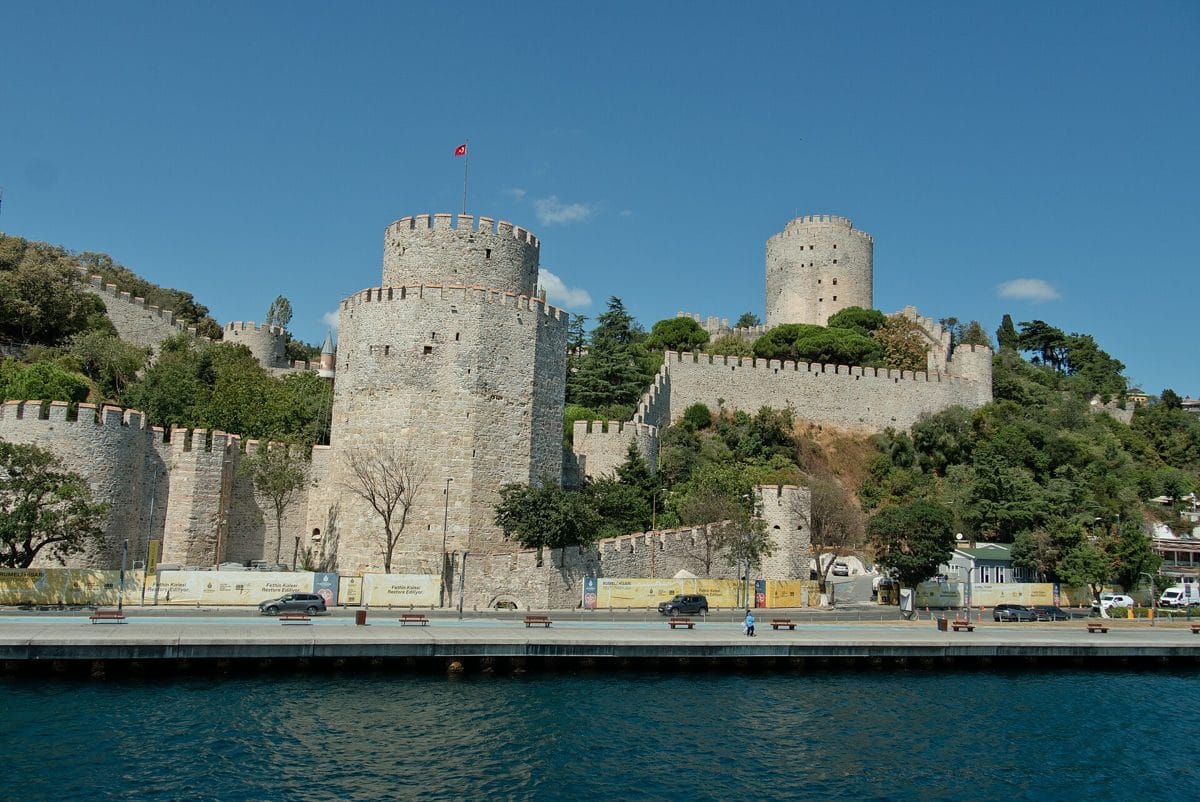
Rumeli Fortress (Rumeli Hisarı) is the Ottoman castle that Mehmed II built beside the Bosphorus in 1452, a year before the conquest of Constantinople. It stands on the European shore at one of the narrowest points of the strait, facing its older counterpart, Anadolu Hisarı. The interior may be closed for restoration, so this guide starts with how to check, then covers the history, what to see if it is open and what to do if it is not.
Pick your date and time: the price of every vehicle is shown on the next step, before you pay. Free cancellation up to 24 hours before pickup.
Check Before You Go
This is the one Istanbul landmark where the first job is to find out whether you can get in. The Ministry of Culture and Tourism's museum site lists Rumeli Fortress as open, Tuesday to Sunday. Press reports in August and September 2026, however, said the fortress had been closed to visitors for about six and a half years during a restoration, with no reopening date given. A Ministry notice also says that climbing the walls and towers is not allowed for security and restoration reasons.
So treat the interior as possibly closed. Before you set out, check muze.gov.tr or call the museum on +90 212 263 5305. If you are staying in the area anyway, the walls are still worth a look from outside, and the rest of this guide covers both cases.
Visiting at a Glance
| Status | May be closed for restoration; no reopening date reported at the time of writing |
| Hours | Listed by the Ministry as 09:00 to 18:00, ticket office 17:00. An older Ministry page lists 09:00 to 17:00 in winter. |
| Closed day | Monday, as listed by the Ministry |
| Ticket for foreign visitors | 6 euros in 2026 and 7 euros from 1 April 2027, as listed by the Ministry; Museum Pass Istanbul is listed as accepted |
| Address | Yahya Kemal Caddesi 42, Sarıyer, on the shore road |
| Nearest stop | Rumeli Hisarı bus stop on the shore road; M6 Boğaziçi Ü. with the F4 funicular is the rail option |
| Time to allow | 1 to 1.5 hours if it is open; one source puts the garden loop at about 40 minutes |
| Dress | No dress code; it is not a place of worship |
Why It Was Built
Mehmed II ordered the fortress before his attack on Constantinople, to control ship traffic on the Bosphorus. According to the Ministry, work began in the spring of 1452 and was finished by August of the same year, with 300 master craftsmen, 700 to 800 labourers and about 200 carters, boatmen and porters. The architect is named as Muslihiddin Ağa.
It faces Anadolu Hisarı on the opposite shore, built in 1393 and 1394, and the strait is usually described as being at its narrowest here. Ships were expected to stop and pay a toll, and those that did not risked cannon fire.
The Three Towers
The main towers are named after Mehmed's viziers: Çandarlı Halil Paşa (22 metres), Zağanos Paşa (21 metres) and Saruca Paşa (28 metres). Saruca Paşa's tower holds the divan room, known for its acoustics and for graffiti left by prisoners. The inscription above the door of Zağanos Paşa's tower is described as the first Turkish inscription on the Bosphorus.
After the Conquest
Once Constantinople had fallen, the fortress lost its military role. It served as a prison from the 16th century, was damaged by fire in 1746 and was repaired under Selim III. It was restored in 1953, for the 500th anniversary of the conquest, and opened as a museum in 1968. A mosque once stood in the courtyard.
If It Is Open: What to See
- The towers and walls. These are the reason to come, but the Ministry notice means the climbs may be off limits even when the gate is open. Some listings describe only the gardens and viewpoints as accessible.
- The collection. The Ministry lists cannonballs, cannons from the time of Bayezid II and later, Byzantine stone pieces and a part of the chain that closed the Golden Horn.
- The garden. Pine and redbud trees grow inside, and there are three viewing terraces, which restoration work may have affected.
If It Is Closed: What to Do Instead
The fortress is large enough that you can enjoy it without a ticket.
- Walk the shore road. The walls run close to the water and you can see the towers from outside. Bebek is a walk of about 20 minutes to the south, according to one source.
- Look across at Anadolu Hisarı. The older fortress is on the Asian shore, directly opposite.
- Add Emirgan. It lies a little further north and has a well-known park; our Sarıyer and Emirgan guide covers it.
- Go by water. Both fortresses look their best from a boat. Our private Bosphorus yacht tour lasts two hours, is reserved for your group, and lists Rumeli Fortress among the sights you may see, depending on weather and sea traffic.
Getting There from Sultanahmet and Taksim
No rail line runs along this part of the shore, so buses do most of the work. Bus numbers change, so check the destination sign.
From Sultanahmet
Take the T1 tram to Kabataş, then bus 22 or 25E along the shore road to the Rumeli Hisarı stop. The entrance is a short walk from the stop.
From Taksim
Buses 40, 40T and 42T run from Taksim to the shore road. Alternatively, take the F1 funicular down to Kabataş and the same 22 or 25E buses. By rail, the M2 to Levent and the M6 to Boğaziçi Ü. lead to the F4 funicular down to Aşiyan, with more changes. A taxi from Taksim takes about 25 minutes outside rush hour, according to one source. See our Ortaköy and Bebek guide for the shore buses.
Getting There from the Airport
Rumeli Fortress is in Sarıyer district on the European side. From Istanbul Airport (IST) a private transfer takes about 35 to 55 minutes depending on traffic. From Sabiha Gökçen Airport (SAW) the route crosses the Bosphorus, so allow more time at busy hours.
With Airports Transfer Turkey your driver waits just outside the arrivals exit, and after you land they send you the exact meeting point and a short video on WhatsApp. The price is per vehicle and shown before you pay, with no extra charge for traffic or flight delays. See Istanbul Airport to Sarıyer and Sabiha Gökçen to Sarıyer for prices.
By public transport the metro and buses are the cheaper options, with several changes and luggage to manage. Our guides compare the routes: Istanbul Airport to Sarıyer and Emirgan and Istanbul Airport to Ortaköy and Bebek.
Related guides: Maiden's Tower · The Bosphorus · Istanbul Attractions: Hours and Tickets · Istanbul Museums
Photo: mike, CC BY-SA 4.0, via Wikimedia Commons.
You might also like
Visiting Istanbul? We'll Handle the Transfer.
Price per vehicle · Flight tracking · Meet & greet · Booking guarantee online, rest in cash